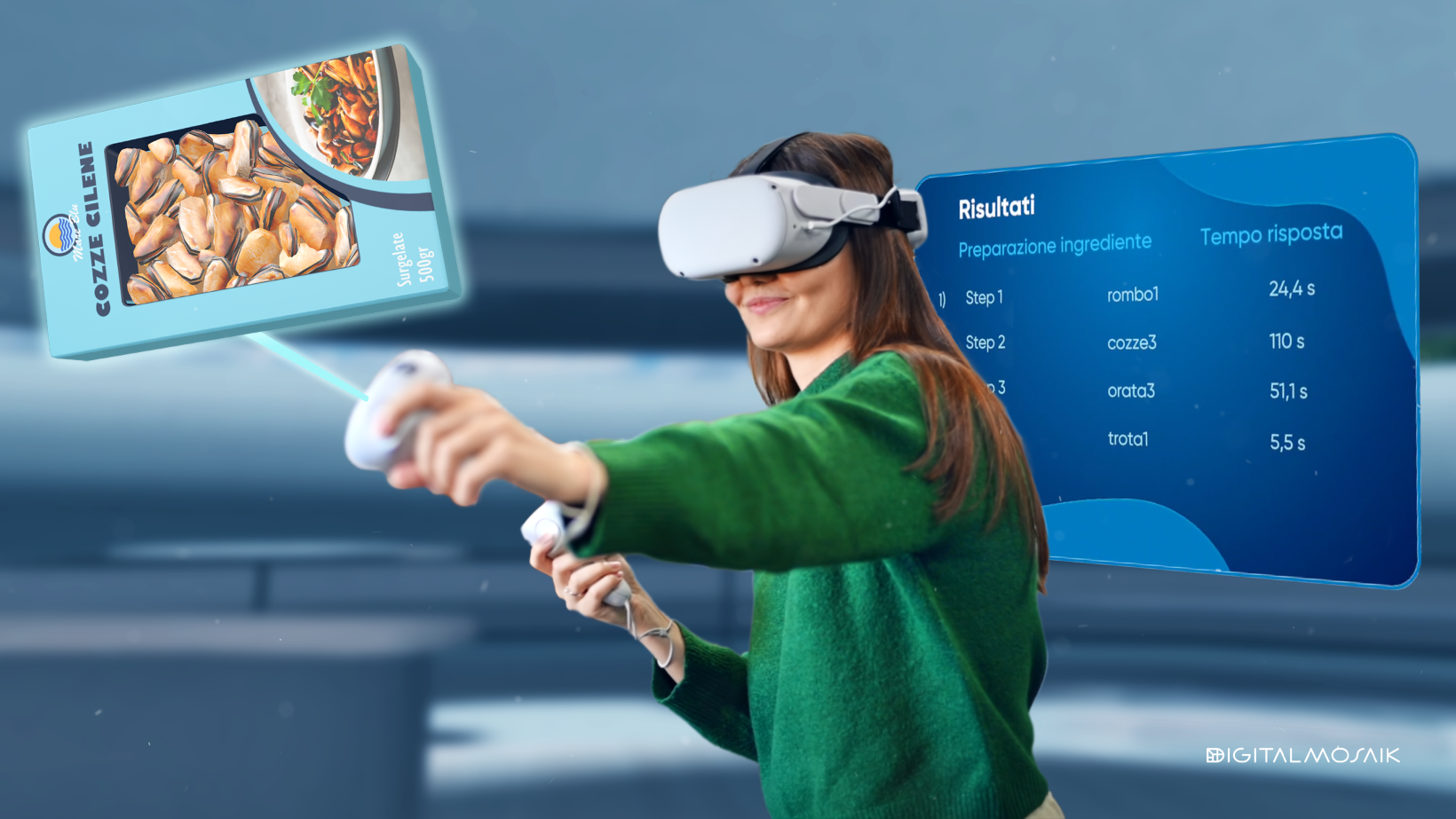
Virtual Market VR
Università di Bologna - Alma Master Studiorum
Researchers
Project TypeVirtual Reality
ScopeResearch
An immersive and modular experience designed to analyze purchasing behaviors in the large-scale retail market, exploring the factors that influence consumer choices among food products.
Identify the most effective ways to encourage and promote a more informed and conscious food purchasing culture, aimed at increasing the adoption of eco-sustainable products.
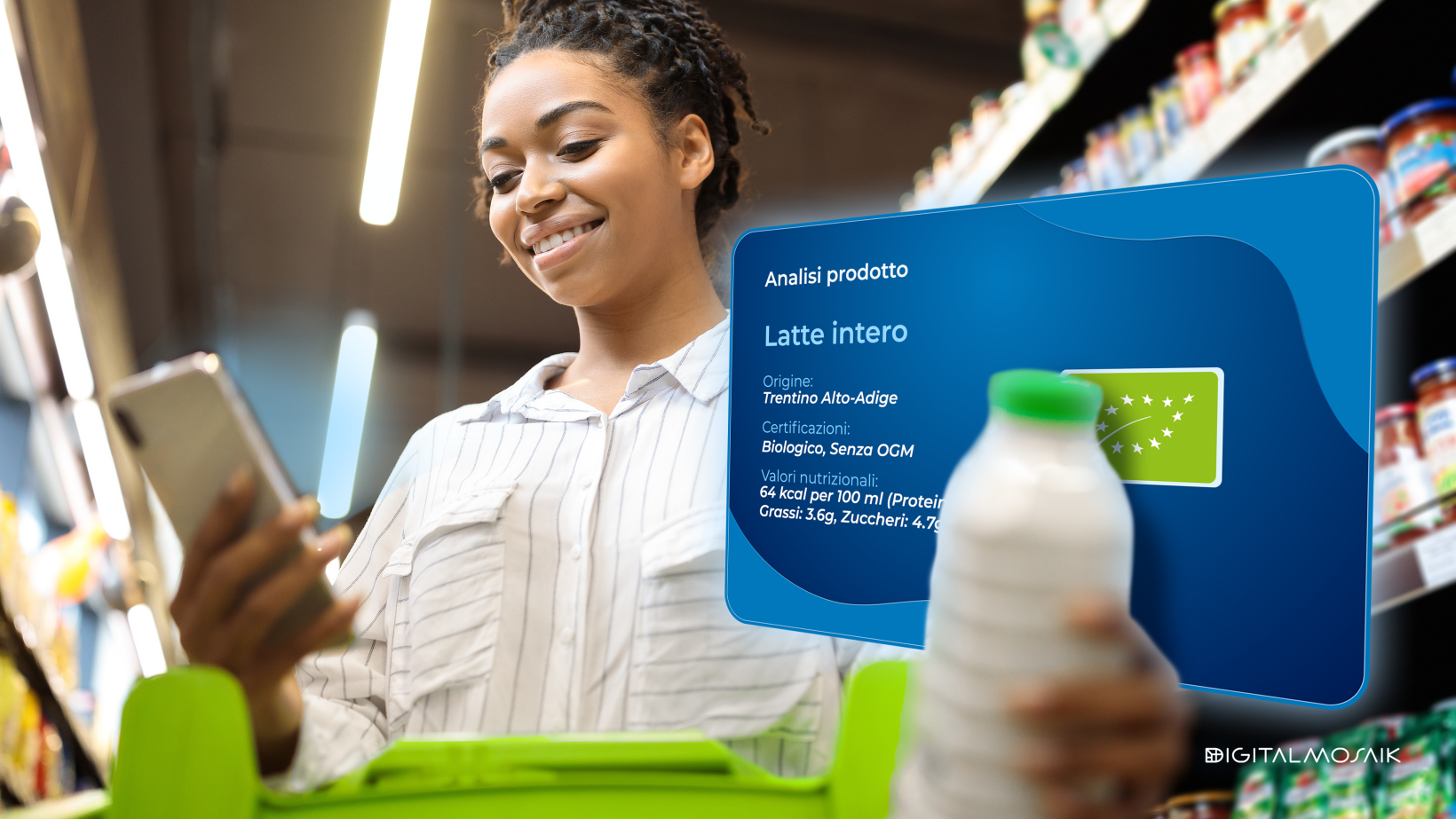
A VR platform that analyzes consumer purchasing behavior, scalable and easily reconfigurable for different contexts.
The Project
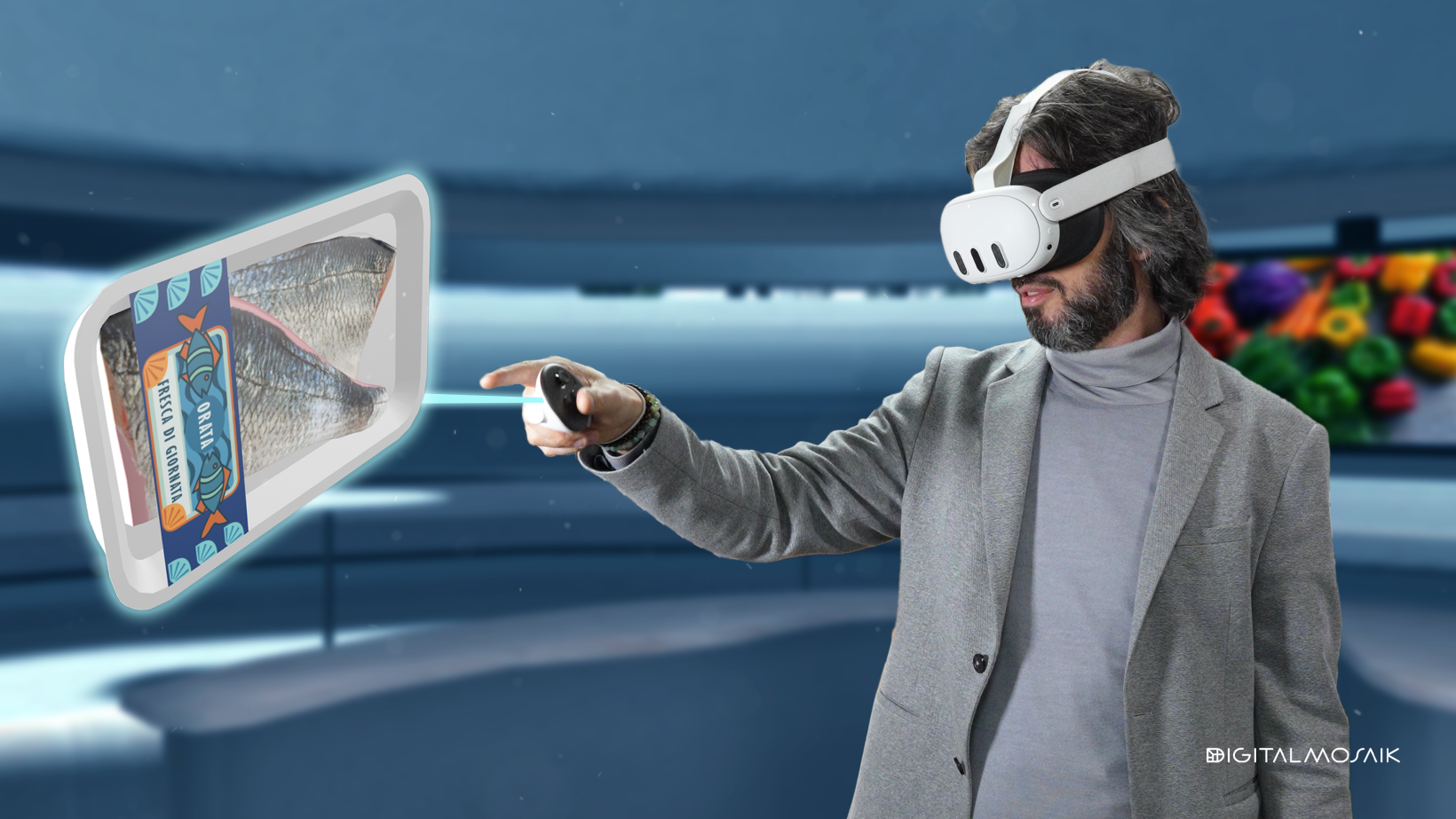
Developed in collaboration with the University of Bologna – Alma Mater Studiorum, Virtual Market VR serves as a powerful applied research tool, combining consumer psychology, immersive technologies, and data analysis. Through the simulation of a virtual supermarket, participants can explore products and make purchasing decisions just as they would in real life. The platform enables the monitoring and understanding of how elements such as price, packaging, nutritional claims, and sustainability information influence the consumer’s final choice.
The goal is to promote more informed and sustainable food purchases, offering companies a competitive advantage in the development of their products and on-shelf communication strategies.
Thanks to its interactive and experimental nature, the project opens new perspectives in the field of consumer research, contributing to the creation of a more ethical and responsible purchasing culture.
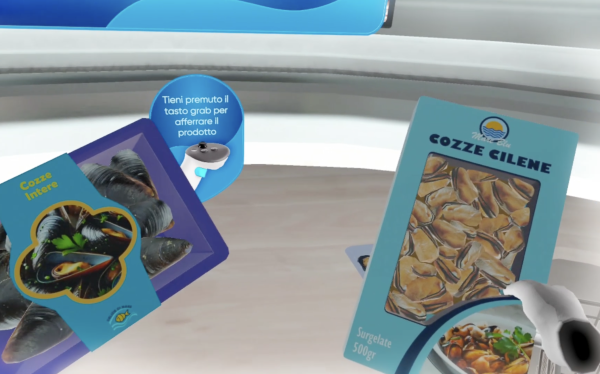
Inside the experience
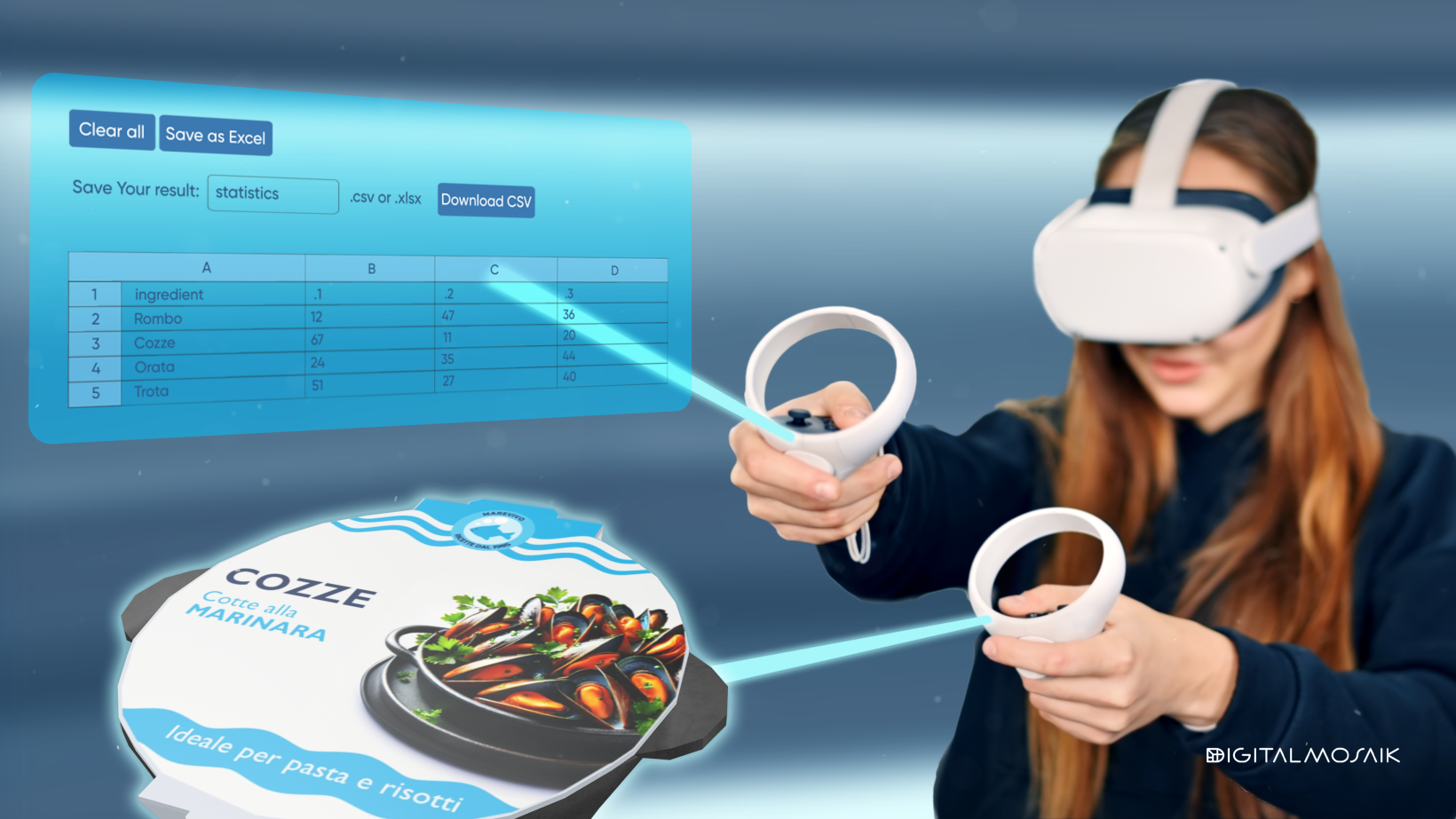
Initially leveraging a mobile app, a broad group of consumers will contribute to the quantitative mapping of purchasing behavior directly in supermarkets. Subsequently, virtual reality (VR) will be used to qualitatively analyze the choices of a selected group of participants invited to this “advanced and immersive survey.”
This methodology allows researchers to study consumer decisions when faced with different variations of the same type of product, considering factors such as aesthetics, sustainability, nutritional value, origin, and brand.
Thanks to an extremely simple and intuitive interaction system, users can freely express their preferences without requiring prior VR instructions. At the end of the experience, the collected data will be crucial both for drawing research conclusions and for developing “smart labels” that combine analog and digital elements, such as QR codes and NFC technology. This approach aims to guide consumers in choosing between different products, with a particular focus on promoting sustainable options.
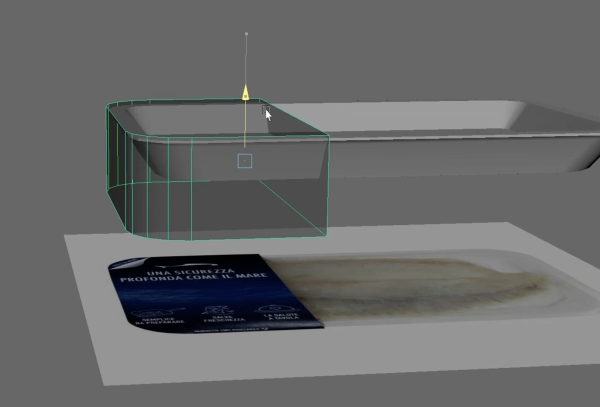
About the design
The Virtual Market VR experience is not based on gaming concepts but rather on extremely simple and functional interactions, faithfully mimicking real-life movements during shopping. The virtual environment, deliberately neutral, presents highly realistic food products, allowing participants to focus on comparative selection. However, the surrounding environment can be adjusted, with customizable color scenarios (e.g., red, blue, or green) to evaluate the impact of visual context on product choices. Each session is unique: participants face a series of customizable options that can be adapted to new analytical objectives over time.